Showing posts with label 40th Anniversary. Show all posts

Friday, December 7, 2012

What are 303(d) Streams?


Freshwater is the most important resource on this planet.  Without it, humans cannot live.  However, with development and industrialization has come the pollution of freshwater bodies on which we rely.  During the 20th century, the USA reached a breaking point with its water bodies.  Estimates state that about  65% of streams were polluted, but no one knew for sure.  Some rivers so polluted from industry and development that they caught fire


http://www.ohiohistorycentral.org/images/11-3-52.jpg 
To bring water pollution under control, Congress passed the Clean Water Act (CWA) in 1972.  This October was the 40th Anniversary of its passing!  Under this act the EPA must regulate how much pollution industries discharge into rivers.  Under Section 303(d) of the Clean Water Act, states must compile a list of water bodies that exceed federal limits of pollutants.  Any stream on this list is called a 303(d) stream.  Prior to the passing of the CWA, there was no way for the public to know how many water bodies were impaired in their communities or which streams were unsafe.  Now, agencies must monitor pollutants in rivers and update the list of 303(d) streams every few years. Once a stream or river is on this list, it is considered a priority for water quality improvement.  This can be accomplished by strict permitting and enforcement on industry, or preventative efforts to reduce runoff.

In Tennessee, the Tennessee Department of Environment and Conservation (TDEC) is the agency that is responsible for listing 303(d) streams.  For an updated list of impaired streams in Tennessee, click the link below.  Here in Hamilton County there are about 30 impaired streams covering approximately 200 miles.


Tuesday, October 23, 2012

Happy 40th Birthday National Marine Sanctuaries Act!


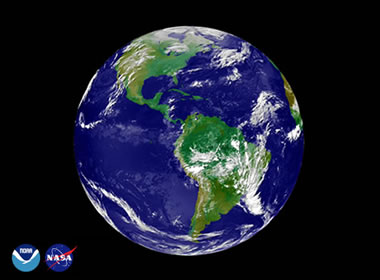
True or False? The oceans are vast and inexhaustible in resources.  While not too long ago scientists believed this to be true, it is resoundingly false.  While the oceans are vast, the resources they provide the planet must be managed effectively to ensure a healthy planet and healthy people.  No matter where we live, whether it is on the coast or hundreds of miles inland, the ocean affects our everyday life.  The ocean provides much of the oxygen for planet Earth through the photosynthesis of phytoplankton, algae, and other aquatic plants;  the ocean regulates the planet’s weather and climate; we rely on the ocean for transportation of goods; the ocean provides us with food; the ocean floor provides us with natural resources including oil and natural gas; the ocean provides other resources that are used in medicine.  If the ocean is not healthy, we are not healthy.

Over the last two centuries, the human population has exploded and technology has advanced at breakneck speed.  This made areas once remote and inaccessible to people within reach.  Coastal development contributed to pollution of estuaries and near shore areas.  The need for food caused a gold rush of sorts to the coast where fishers exhausted fisheries to the point of collapse.  Something needed to change, and proactive measures needed to be taken to ensure that our ocean resources could endure for generations.

1972 was a good year for environmental legislation.  The Clean Water Act (CWA) and the Marine Mammal Protection Act (MMPA) are two well known pieces of legislation that passed into law in 1972.  They were landmarks for conservation, giving agencies the obligation to regulate clean water and punish individuals or organizations that harm marine mammals, many of which are threatened or endangered.  However, another act was also passed that same year.  It is just as important as the CWA or MMPA.  It addresses some of the challenges described above and the goal of this act is to ensure that future generations can enjoy the cultural, economic, and ecological benefits of the marine environment:  The National Marine Sanctuaries Act (NMSA).


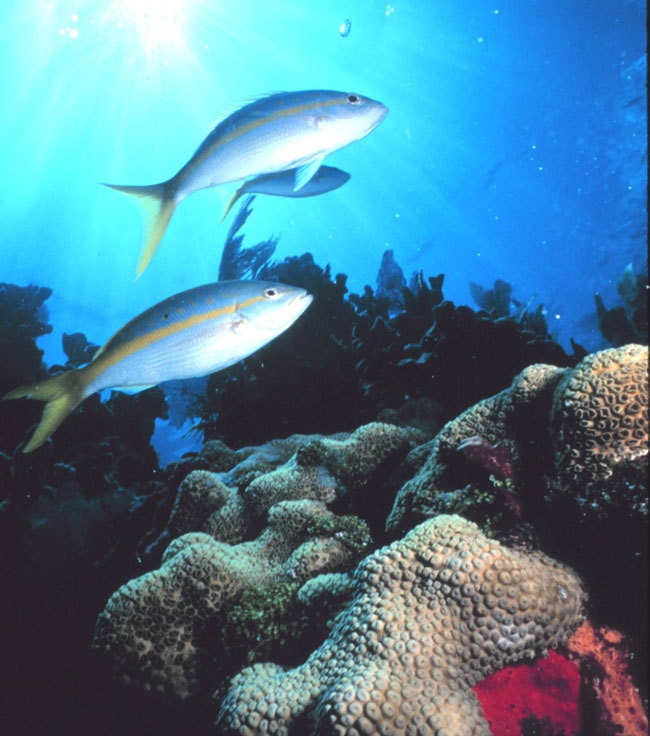
The NMSA gives authority to the Secretary of Commerce to designate areas of the marine environment as national marine sanctuaries.  These areas may be selected based on conservation needs, economic or ecological benefits they provide, or their cultural archaeological or educational qualities they possess.  Currently, there are 14 National Marine Sanctuaries in U.S. waters, and each protects a precious resource for us and for future generations.  Sanctuaries may protect a significant archaeological site from degradation, nursery areas for commercially important fish, breeding grounds for fish and marine mammals, or may have a high diversity of organisms in that area.

Currently the NMSA is under reauthorization.  This means that the Act may be updated so that it can adapt to current management regimes for marine resources,  In addition, it may also allow for more sanctuaries to be added to the national system.  More sanctuaries means more areas where fish and other marine animals can escape from intense pressures from people.  More marine sanctuaries means healthier oceans:  future harvest for fishers, scenic places for divers and snorkelers to enjoy, and refuges for marine animals.